The Faith and Future of Democracy Initiative is a research program housed at Georgetown’s Center for Muslim-Christian Understanding (CMCU) that explores the essential role religious traditions can and must play in sustaining and renewing democratic life.
Rather than treating religion as a problem to be managed or privatized, the initiative starts from the premise that robust religious commitment—across traditions—offers indispensable resources for democratic culture: moral seriousness, a sense of the common good, habits of solidarity, and a willingness to make claims about truth and justice in the public square. At the same time, the initiative takes seriously the genuine tensions that arise when deeply held theological convictions meet the demands of pluralism, and asks how believers from different traditions can navigate those tensions honestly rather than by diluting what they believe.
READ MORE
Our initiative brings together emerging and established scholars, journalists, ministers, practitioners, and public thinkers who are committed to difficult conversations and challenging topics. We foster dialogue across political and religious others (particularly Muslim-Christian conversation), aiming not to flatten differences but rather to draw them out, in order to interrogate our own assumptions and participation in religion and politics.
Why?
We envision a future in which religious communities contribute to democratic life not through domination or withdrawal, but through active participation driven by their respective faiths.
At its best, faith can offer moral clarity, spiritual depth, and a vision of human flourishing that strengthens democratic culture. The Faith and the Future of Democracy Initiative exists to support that work.
Our mission is to convene thoughtful leaders, produce rigorous scholarship, and create public conversations that help religious communities navigate the future of democracy and pluralism.
We do this by:
- Creating spaces for emerging leaders to study and reflect on the relationship between faith and democratic life
- Producing research that deepens public understanding of religion’s role in political culture
- Hosting conversations with scholars, journalists, and practitioners working at the forefront of these debates
- Developing resources that help both religious communities and civic leaders engage these questions thoughtfully
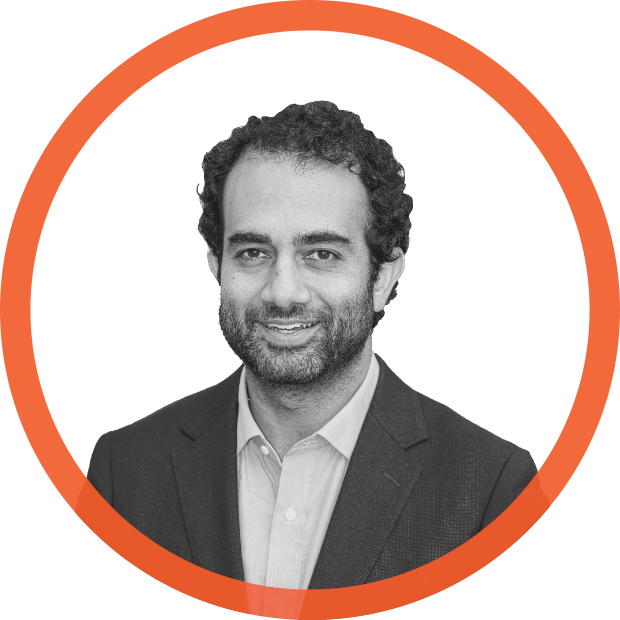
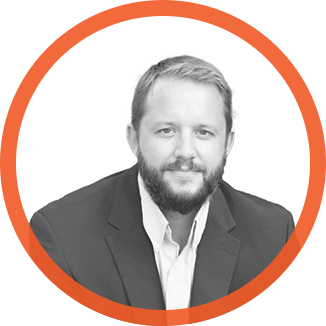
THE PROJECT LEADERS

How It Began
The Faith and the Future of Democracy Initiative grew out of ongoing conversations between Matthew Kaemingk and Shadi Hamid about faith, pluralism, and politics. Kaemingk, a conservative Christian theologian and Hamid, a liberal(ish) Muslim political scientist, came together to imagine what it would mean to have dialogue over deep difference.
What began as a series of conversations soon expanded into a broader project, one that brings together diverse voices to examine these questions with rigor, honesty, and curiosity.
FAQ
Who should apply?
We encourage applications from emerging scholars, activists, and leaders working at the intersection of religion, politics, and pluralism. Successful applicants will be able to demonstrate:
- A deep commitment to academic excellence. Their demonstrated capacity for research and writing competency should be at a high level. At minimum, prospective fellows should have completed a master’s degree in a discipline related to religion, politics,, ethics, or the social sciences.
- A deep commitment to the beliefs and practices of either the Islamic or the Christian faith. We seek applicants for whom faith is a central, not ancillary, part of their personal, professional, and academic identity.
- A deep commitment to working across serious religious, cultural, and political differences. Successful applicants will need to demonstrate their past experience and future willingness to work alongside those who do not share their core commitments.
- A deep commitment to public thought leadership. While serious academic work is encouraged, successful applicants will need to demonstrate a commitment to writing and speaking for a general audience.
A few other notes:
- While our primary interest is in serving American citizens, we are open to considering international applicants.
- There is no specific age restriction for applicants. That said, our preference is to serve leaders nearer the beginning of their respective careers in the academy and public life.
What do fellows receive?
- Fellows receive a groundbreaking multi-faith and international learning experience. Over the course of two years, they will have the opportunity to meet and learn from a variety of world-class thought leaders working at the intersection of religion, politics, and pluralism.
- Fellows will also have the opportunity to build meaningful professional and personal relationships with a network of emerging Muslim and Christian leaders doing cutting-edge research and writing on issues related to faith, politics, and democracy.
- Fellows will receive mentoring and support in their own professional growth as a public thought leader in the fields of religion, politics, and pluralism. Each fellow will also receive critical and constructive feedback on their ideas and writing from their peers and mentors.
- Each fellow will receive a $15,000 stipend for their active participation in the program.
- Each fellow will have their travel, food, and lodging expenses covered for all four gatherings.
- Each fellow will have the opportunity to apply for a small grant whereby they can organize their own public event around their respective ideas and work.
What are the expectations?
The fellowship requires active participation and contribution to the program for a total of two years (Fall 2025- Spring 2027) :
- Fellows are expected to physically attend four physical gatherings over the course of two years. Our two domestic gatherings will be in Washington DC and Los Angeles. Our two international gatherings will be in foreign locations that will be determined at a later date. These will be international cities where the questions of pluralism and the relationship between Christianity and Islam are of particular importance. Our domestic gatherings will last four days and our international gatherings will last six. Fellows are expected to attend and participate in the entirety of these gatherings. The first gathering is scheduled for Dec 2-5, 2025 in Los Angeles, CA.
- Fellows will complete 2,000 pages of reading on the intersection of religion, politics, and pluralism over the two year program. Fellows will be expected to deeply engage Islamic, Christian, and secular texts in their reading and discussion.
- Each fellow will write two original essays for publication on issues related to faith, politics, and pluralism. Each fellow will also be expected to collaborate with a fellow from a different faith tradition on a co-authored essay.
Who are the instructors?
Who are the instructors?
- This program is directed by Dr. Shadi Hamid and Dr. Matthew Kaemingk. Together they serve as the primary instructors and mentors for the fellows. You can learn more about their research, writing, and mutual podcast by clicking here.
- During each gathering fellows will also learn from a variety of world-class leaders and scholars working at the intersection of religion, public policy, and pluralism.
The Faith and Future of Democracy Initiative

A catalyst for Christian+Muslim discourse.